





Media Coverage
Our focus entirely is to be a renewable company with a low carbon footprint : Samir Somaiya, CMD, Godavari Biorefineries
Indian Chemical News | Jan 29, 2021Samir Somaiya, CMD, Godavari Biorefineries Ltd. spoke exclusively to Pravin Prashant, Editor, Indian Chemical News on expansion plans, revenue forecast, Capex plan, market share in Ethanol blending, R&D and sustainability. Excerpts of the interview:
What's your expansion plan for the next 2 years?
We have just completed an expansion plan in our Ethanol capacity. We have spent Rs. 70 crore and have expanded our Ethanol capacity from 200,000 liters per day to 320,000 liters per day last year and 400,000 liter per day in past few months. So, we have effectively doubled our daily capacity of Ethanol. I think in the next couple of years we would like to spend more money further expanding our Ethanol capacity and also enter into specialty chemicals based on Ethanol.
Two years ago we put 38 million liters into the Ethanol program and in the coming year we expect to deliver 70 million liters and we would like to create an Ethanol capacity in such that it can go to 100 million liters to deliver it into Ethanol production capacity. We make chemicals that go into pharma intermediates and agro intermediates so we have lined up couples of new chemistries that we want to invest in the future so we are planning to expand our footprint in specialty chemicals as well.
I would say 90% of what we produce probably will go under Ethanol blending and 10 to 15 % of production would continue to be catered to customers of ours which we had over the last many years.
What's your revenue forecast for FY 2020-21?
We are anticipating a turnover of Rs. 1,500 crore in 2021. If you look into the past, sugar used to be a large percentage of top line mix. Going forward we anticipate sugar, Ethanol and chemicals will contribute one third each in terms of revenue. Sugar would be about Rs. 400 - 500 crore, Biofuel or Ethanol will be Rs. 400 - 500 crore and Chemicals will be Rs. 500 crore. That's how we are rebalancing our portfolio and then going to grow Chemicals and Ethanol space.
What is Godavari Biorefineries doing so that its chemical division grows to one third?
I look at Sugarcane and agriculture as a great feedstock for food, fuels and specialties and in specialties we look at the sugar and fibers as the source. So going forward, we would further see the use of Ethanol also for chemical making specialty chemicals and bagasse also to be used making specialty chemicals which go into the market. In the past one year and coming year and a half you will see Ethanol portion expand because that’s where our focus has been and post that we would definitely see emphasis on chemistry and chemical coming out from bagasse and Ethanol.
Are you planning to have new factories under your expansion plan?
Our current aim is to do expansion in both the current locations. We think that we have a very good base in terms of infrastructure, people and it is easier to do the ground field expansion right now. So this is how we are expecting to go forward from the logistical standpoint and from the human standpoint and this is where we will grow our business.
Are you looking for any Capex expansion in the next two years?
We would be looking at those currently under preparation but we will definitely do a Capex expansion and we would look at expansion in Ethanol and in chemistry and renewable chemistry which we are talking about.
What is your market share in Ethanol blending and how do you see the biorefineries policy of the government of India?
I think the government policy in biofuels is very good. The previous policies used to look at molasses or Ethanol as a bioproduct of the sugar industry. The current policy mixes Ethanol and sugar industry as substitutes and they give optionality to de risk the business as well as to de risk the farming sector so I think the policy is very good.
India has to look at sugarcane surplus as an asset and this policy recognises it as such. So this surplus sugarcane with the policy will start converting to Ethanol and I believe in the next couple of years we will see local Ethanol meeting almost 20% of the gasoline needs or the petrol blending needs all over the country.
I think the policy is very good and as a company Godavari Biorefineries is actually diverting more than 40% of its sugar and cane to Ethanol so we have gone almost towards the Brazilian model where companies in Brazil have and optionality towards almost 50% of its sugars where they can swing between sugar and Ethanol and this is what we have created in our company.
More than 3 billion litres have been bid and we will be around 17 million litres so market share is actually small but I would like to say we have pioneered the use of sugarcane juice and syrup for Ethanol. This is a new policy by the government of India earlier it was molasses and they have also allowed sugarcane juice and syrup and I would like to say that we have been working on one of the first few to pioneer the use of this to make Ethanol. So in that sense we have done a good job.
How big is the biorefineries blending market in India?
This coming year we should blend about 7-8% of gasoline or petrol with Ethanol and the government wants to take it to 20% that’s how big it is. The nice thing about Ethanol is it's a low carbon greenhouse gas or climate change mitigating fuel and it drives the rural economy so in terms of rupees, I think they are wanting about 300 crores litres and if you multiply with about Rs. 55 - 60 a litre.
Where do you stand viz a viz other players in the biorefineries blending market?
We would be one of the larger players. The issue is we have one Ethanol based facility and this one Ethanol based facility is at a single point I think we do 400,000 litres per day and it’s among the larger one in the country but there might be others who have 100,000 litres per day and we might have 5 or 6 of them. Our approach as a company is to go deep rather than to do a horizontal experiment. We want to make value out of that stick of cane and we want to go into the de risking approach. We would be amongst the largest.
Do you have inhouse R&D or do you have tie-ups with R&D institutions?
We have a combination of both. We have a very good research lab in New Mumbai and we do a lot of our own research with our scientist and we don’t think we have the answers for everything so we do tie-ups with education institutions with research labs and we think its partnership and collaboration which will take us forward.
Any numbers to the R&D budget which you invest?
More than numbers, it's lots of people. We have 25-30 scientists working on the R&D front and that numbers change year on year. We have accruable research which is a strong point for us. Like all chemical companies we have also launched your own hand sanitizers product called ‘Pavan’.
How has the hand sanitization market done for Godavari Biorefineries?
To be honest in the beginning it was very good but we need to develop a much better B2C marketing capabilities to succeed.
On the sustainability part are you also looking at becoming net zero at some point of time?
Currently, we are measuring our current carbon footprint. We are quite ahead already but definitely our game is to be sustainable even outside the ecosystem which is farming system and sustainability with the company. We were in fact one of the first in India to even get a million dollar to set up a cogeneration plant 20 years ago and at that time cogeneration from Bagasse was not very common in India. We got grants from the USA and to demonstrate how greenhouse gas mitigation plants can be done in the company. Our focus entirely is to be a renewable company with a low carbon footprint.
Anything specific which you are working on sustainability?
I talked about the whole emphasis on sustainable farming and that itself is a big focus on how to make farming more sustainable. I talked about simple issues like extracting potash from ash that itself creates a more circular economy and also creates a different sustainability.
Godavari Biorefineries would be completing 81 years. How do you see this complete journey?
I would love to say that we are ready for the future.
Source: Indian Chemical News
Petrochemicals will be a sector to reckon with by 2025: Experts
Indian Chemical News | Feb 22, 2021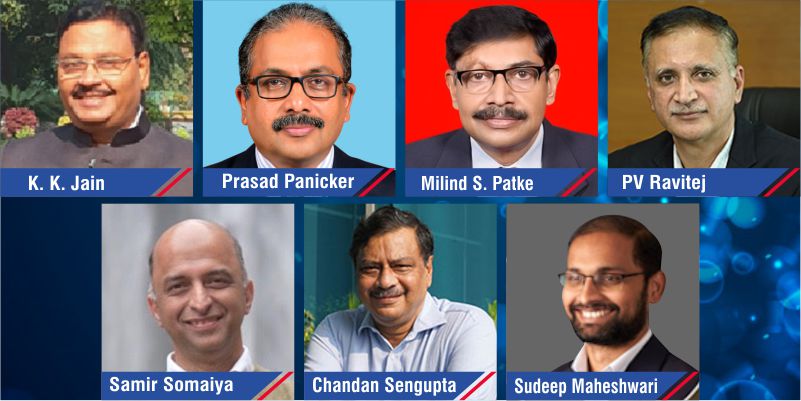
At the E-conference on "India's Petrochemical Industry Outlook 2021" hosted by Indian Chemical News (ICN), there was a consensus among industry leaders that the future survival of the oil refining industry will depend on petrochemical products. The virtual event moderated by Pravin Prashant, Editor, ICN brought to fore the key growth drivers such as government incentives, shift towards biofuels and electric vehicles, better profit margins and even climate change.
In the longer run, demand for petrochemical might go up, says K. K. Jain, Executive Director, Center For High Technology who feels refining is facing the biggest brunt while there is a big opportunity for petrochemical products, particularly packaging industry that flourished during the pandemic.
Jain is highly pragmatic about the success of biofuels which he says will make the oil and gas industry players shift their priorities. He explains, "There are 12 bio-refineries under a scheme PM Jeewan Yojna. Out of that one is being built by HPCL, two by BPCL and one bamboo-based biofuel refinery by NRL in North East India. Another 8 refineries are yet to come as PSUs are giving priority to biofuels and 2021 onwards, we expect much more aggressive inputs and applications which will come from the transport sector."
Petrochemicals and plastics had a very bad press in the last year, says Chandan Sengupta, Senior Vice President, Haldia Petrochemicals, who wonders what would have happened to the whole packaging industry that made contactless delivery possible. Yet he agrees that sustainability is a responsibility.
"Petrochemical sector is a huge employment enabler and thus the government needs to relax the stringent regulatory bottlenecks and unrealistic tax regime. He also cautions against the lack of enough groundwork to meet the set targets. "The crude to chemicals or C2C is going to be a buzzword. The lesser of fuel oil and more of chemicals," comments Sengupta.
Calling for the integration of refineries with petrochemicals, P. V. Ravitej, Executive Director - Refineries, BPCL talks about the need for tapping product imports worth Rs. 95,000 crore. "Since the priority of Indian PSUs was to ensure the fuel to common man, it ensured that we stay in refining than petrochemicals. However, now after meeting our fuel requirements, we need to rise to the occasion to meet the demand. With decrease in growth of gasoline and diesel by 2020, the focus will be more on petrochemicals. We are expecting the petrochemical will reach 15% from 5% by 2030, resulting in a decrease in import dependency. Going forward, we need to develop new polymers through R&D."
Petrochemicals have outgrown the other basic chemicals, mentions Prasad Panicker, Director & Head of Refinery, Nayara Energy who feels that it has not got the attention due to complexities of the fuel market.
"The refineries are looking back at petrochemicals, the key driver being profitability. Yet despite the fact polypropylene and ethylene offer more profits than fuels and lakh crore of imports trigger huge demand, Indian refineries have to be extra careful in terms of investing as prices of crude oil is a key factor. There should be clarity in terms identifying relevant petrochemicals whether niche or bulk, depending on growth in next 10-20 years," added Panicker.
Panicker agrees with other experts on the integration of refining and petrochemicals to get a feed advantage but points out the need for consciousness about competition.
"It is a globally competitive market and that will decide the future. For blending of oil up to 15% by 2030 and beyond that, we have to develop new technologies. In the next 10 to 20 years, support from the government, correction in custom duties and huge infra projects will pip the growth. With irrigation projects worth Rs. 180 million, PVC pipes are in high demand. Climate change too will play a huge role in growth," adds Panicker.
Ethanol has huge savings in terms of energy, says Milind S. Patke, Executive Director – Biofuels, BPCL, "While the government was aiming 20% blending by 2030, it has advanced this target to 2025. From the current 325 crore liter capacity in ethanol, there will be a demand for 925 million liters, resulting in a gap of 600 million liters. Traditionally ethanol is produced from sugarcane molasses route but with the government fixing remuneration for different sources including food grains as enablers. There is quite an exciting opportunity for entrepreneurs to expand the market in the next 3 to 4 years. There is huge export potential and we need revamping of existing distilleries for boosting the production. Oil companies are themselves looking at setting up refining plants. IOCL, HPCL and BPCL are looking at producing 150 million litres of Ethanol in Chhattisgarh, Telangana and Orissa with 500-kilo litre per day capacity by 2025."
"Government is working towards creating self-reliance and transformation towards a circular economy," says Samir Somaiya, CMD, Godavari Biorefineries who highlights the growing focus on hydrogen fuels. "To reach the target of 15% Ethanol blending from 8.5%, the government is encouraging the industry to produce additional 5-6 million tonnes of sugarcane to produce 6,000 liters of ethanol per day. Ethanol production from sugar beet, molasses, maize, sorghum and even damaged rice will lead to 12 billion liters from current 5 billion litres."
When you grow crops, you are reducing the CO2. We are not only intercropping but also working with farmers for low carbon farming and work towards a circular economy, adds Somaiya.
Outlining the future strategy, Sudeep Maheshwari, Senior Principal, Kearney stresses the need for one cracker plant each year to keep pace with demand be it polypropylene or polyethylene, the nature of certain derivatives may increase and others may decrease and market factors will play a decisive role in this."
Maheshwari who bats for partnerships and push marketing also points out the need for more efficient feedstock sharing rather than just incentives and duties.
"With western markets saturating fast, India has a big opportunity to tap the potential but global players are a bit reluctant as they fear inconsistency in partners and uncertainties in rules here. Therefore, we must start doing things differently and increase their confidence," added Maheshwari.
Source: Indian Chemical News
Biorefineries and alternate fuel
India Chemical News | Mar 15, 2021Contributory article by Mr. Samir Somaiya in Chemical Industry Outlook 2021 published by Indian Chemical News on Page 84 & 85
Source: https://www.indianchemicalnews.com/assets/compendium_assets/ICN-Chemical-Outlook-Compendium.pdf
Godavari Biorefineries to expand ethanol capacity
Indian Chemical News | Jun 07, 2021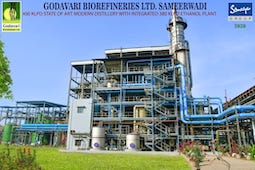
Godavari Biorefineries is planning to expand its ethanol capacity to 600 klpd in 2022 as our aim is to deliver more than 100 million litres to this programme, says Samir Somaiya, Chairman, Godavari Biorefineries Limited.
The company has already expanded its capacity for making ethanol from 200 to 400 klpd in the last 2 years and Godavari Biorefineries is doubly excited to expand its production capacity further to meet the growing demand and opportunity commented Somaiya.
Speaking on the government's resolve to meet the target of 20 percent ethanol blending in petrol by 2025, Somaiya said, "The Indian sugarcane processing industry is an asset to the country. The advancing of the 20% ethanol blending mandate to 2025 by the Government of India is in response to the increase in ethanol capacities across the Indian sugar industry. The sugarcane surplus in India will find its way in meeting a part of India's energy needs, provide a cleaner burning fuel, mitigate climate change, and provide stability to sugarcane farmer incomes across the country."
"The industry will have the optionality in choosing between ethanol and sugar and will have stable cash flows and a remarkable opportunity for growth," commented Somaiya.
Commenting on the E-100 pilot project launched in Pune by Prime Minister Narendra Modi, Somaiya said, "E-100 has been used in conjunction with E20 in Brazil in flexible fuel cars for many years. Bringing this idea to India will allow for distributed production and distribution. India will be able to meet local transportation energy needs locally. The government has allowed for ethanol to be made from multiple feedstocks including molasses, sugarcane syrup, grain and also 2g. E-100 will encourage carmakers to adapt their vehicles to take this fuel and it will make India more self-reliant, combat climate change, strengthen and help grow the industry and ensure stable livelihoods to the farmer."
Last week, the government has resolved to meet the target of 20 percent ethanol blending in petrol by 2025 which has been now preponed by 5 years, says Prime Minister Narendra Modi addressing the World Environment Day event jointly organized by the Ministry of Petroleum & Natural Gas and the Ministry of Environment, Forest and Climate Change through video conference.
The Prime Minister also launched the ambitious E-100 pilot project in Pune for the production and distribution of ethanol across the country.
Source: Indian Chemical News
Godavari Biorefineries to deliver more than 100 million litres in EBP Programme
ChiniMandi.com | Jun 07, 2021
Last week Hon’ble Prime Minister Shri Narendra Modi during the World Environment Day event released the “Report of the Expert Committee on Road Map for ethanol blending in India 2020-2025”. The Government of India released E-20 Notification directing Oil Companies to sell ethanol blended petrol with percentage of ethanol up to 20% from 1st April 2023; and BIS Specifications for higher ethanol blends E12 & E15. The programme is designed so that maximum are accrued to the farmers by way of increase in their income. It is expected that around 165 LMT of grains will be utilized for the production of ethanol thereby creating additional demand and consequently increase in the income by farmers. By 2025, the Government of India is targeting to divert excess sugar to the tune of 60 LMT produced annually for the production of ethanol in order to make timely payments to farmers. More than ₹40,000 crore of investment is expected to come in the expansion / new projects of distilleries which will not only create job opportunities but also spur the economic growth in the area. Also, it is expected that around ₹30,000 crore of foreign exchange will annually be saved once 20% ethanol blending with petrol is achieved by 2025, thus also a step towards “Atmanirbhar Bharat”. In the current ethanol supply year, which started in October, India plans to have 10% ethanol-blending with gasoline. As much as 4 billion litres of ethanol will be needed for achieving a 10% mixing ratio. For 20% by 2023, 10 billion (1,000 crore) litres will be needed.
Sharing views on the development Mr. Samir Somaiya, CMD – Godavari Biorefineries Ltd. said, “The new Roadmap announced by the Honourable Prime Minister, Shri Narendra Modi, on the occasion of the World Environment Day is visionary. The program recognizes the biomass surplus in the country as an asset. The sugarcane surplus in India will find its way in meeting a part of India’s energy needs, provide a cleaner burning fuel, mitigate climate change, and provide stability to sugarcane farmer incomes across the country. The advancing of the 20% ethanol blending mandate to 2025 by the Government of India is in response to the increase in ethanol capacities across the Indian sugar industry. The Government also plans to introduce E20 as a fuel by 2023. The industry will have optionality in choosing between ethanol and sugar and will have stable cash flows and a remarkable opportunity for growth. These policies will transform the face of the industry and indeed the rural economy.”
Speaking on how Godavari Biorefineries is aligning itself with the country’s vision, he shared, “Godavari Biorefineries has already expanded its capacity for making ethanol from 200 to 400 klpd in the last 2 years. We will now expand to 600 klpd in 2022. Our aim will be to deliver more than 100 million litres to this programme. In the future, we will be working to add additional feedstocks to supplement our ethanol production from sugarcane. We are working on feedstocks like maize, sugar beet and 2G to further add to our ethanol production in the future. We are working closely with farmers on their varietal choice of cane, intercropping and agronomy to help them get better yields and output.”
“The Government is also encouraging the production of Bio-CNG and EVs. Sugarcane processing factories can also make Bio-CNG and are already surplus in electricity as they cogenerate power. Godavari is excited to participate in and lead the transition in the industry.” Somaiya further added.
Source: ChiniMandi.com
Mr. Samir Somaiya in a conversation with ChiniMandi News expressed views on the Indian sugar industry and way forward
CHINIMANDI NEWS | Aug 19, 2020
The Indian sugar millers have been reeling from various crises like unsold sugar stocks, cane dues, unpaid interests etc. Coronavirus pandemic has also aggravated the crisis exponentially by hitting the sugar industry in terms of trends in feasibility of performance, production capacity, consumer market or precisely every factor that is incorporated to make this wheel from farmer to consumer run smoothly. A bailout package seems to be the only favorable solution demanded by the sugar millers at present.
In a conversation with ChiniMandi News, Mr.Samir Somaiya – Chairman & Managing Director at Godavari Biorefineries Ltd. expressed his views on the current scenario of the Indian sugar industry and way forward.
Speaking on the steps the Government should take in order to bailout the industry from crisis. He said, “The Government is already taking steps in the right direction to help the industry and also see the industry as a growth engine. India has proven itself to be a surplus producer of sugarcane. This sugarcane surplus has to be seen as a resource to meet our food and energy needs. The Government realizes this and has announced a bold policy to encourage the use of sugarcane juice/syrup and B Heavy molasses to ethanol. This will be used for ethanol blending with petrol to meet the energy security of the country. The Government is also encouraging the making of 2G ethanol (from cellulose) and Bio-CNG. These are far reaching changes and will transform the face of the industry and indeed the rural economy. But this process takes time. Sugar companies will need to get regulatory approvals and finance to build these distillation assets. Until then, the surplus sugar will have to be exported.”
“The Government has also announced good policies for the export of this sugar. In the current season, India has exported almost 6 million tons of sugar, the highest ever. We are hoping that the Government of India announces a similar policy for the coming season, so that the Indian sugar once again finds its way in the global market.
The Government should also make sure that the price of sugar and ethanol are remunerative in proportion to the price of cane. Currently, the Indian sugarcane prices as a function of sugar price are among the highest in the world. We understand that the farmer needs a remunerative price, but in that case, the sugar or ethanol price must be raised accordingly. With these policy changes, the Indian sugarcane industry will again be a sunshine industry.” He added.
Commenting on demand, supply dynamics play in the upcoming season considering the after effects of the outbreak of Covid-19 Mr. Somaiya said, “There is definitely a slowdown in the sale of sugar. With much of the economy slowly emerging from the lockdown, we hope that the demand picks up as well. The Government is likely to fix a minimum selling price of sugar of Rs. 33 per kg. We expect the price of sugar to be above this level.”
Sharing his views on what measures Indian sugar industry should take to step up for the ethanol production programme and also how his organization is taking steps to be exemplary for the Indian sugar industry in building a sustainable bio-fuel economy he shared, “The millers must quickly apply for regulatory and financial approvals and take steps to divert their sugar surplus to ethanol.
Godavari Biorefineries Limited is very keen on supporting the Government of India’s bio-fuel economy programme. We expanded our distillery from 200,000 lpd to 320,000 lpd in the last season. For the coming season, we are expanding our distillery capacity to 400,000 lpd. Like many sugar companies in Brazil, we have created optionality in choosing between sugar and ethanol. In the coming year, we will be making ethanol via sugarcane syrup and B Heavy molasses. We expect to divert over 40% of our sugars to make ethanol. As a company, we are also keen on working on 2G ethanol, and Bio-CNG policies that the Government is actively promoting. We have also pioneered the use of renewable feedstocks to make a variety of chemicals, materials and renewable power finding applications in pharmaceuticals, agriculture, flavours and fragrances coatings, and more. We are also working with farmers to help them intercrop and improve their agronomy so that they farm and earn better.”
Being asked, knowing that India can be the largest ethanol producer in the world, what long term policies should the Government take for the industry to develop looking at the current scenario and what immediate measures may be required in making the dynamics of demand supply play well Mr. Somaiya said, “Brazil and the USA are very large players in ethanol in the world, and to get to those levels, India will need a wide variety of renewable biomass. But, the Government is already trying to increase the blending percentage and has made bold targets to move towards a 20% blend rate. I think promoting flex fuel cars like in Brazil would be a next step to further encourage higher adoption. And in states that are already ethanol surplus, the blend rate can be increased quicker.”
Signed a Memorandum Of Understanding for working on a project 'Biomass For All’
May 24, 2018'Godavari Biorefineries is proud to announce that we we have signed a Memorandum Of Understanding for working on a project 'Biomass For All’, in the presence of the Prime Minister of the Netherlands, Honourable Mark Rutte, and the Minister for Agriculture and Deputy Prime Minister, Carola Schouten.
This project aims to develop and implement new biomass based sustainable value chains in partnership with experts, solution providers, financiers and market players from The Netherlands and India.
We are working on ways to ensure that biomass is transformed into new products to maximise value addition in generating sustainable new business and livelihoods. And we will reduce the negative environmental, social and health impacts (as air pollution) as much as possible.'
Partners : Signed the MOU : Somaiya Group/Godavari Biorefineries Ltd., MVO Nederland (CSR Netherlands), ECOR, Avans University of Applied Sciences, The Biosfera Foundation, Center for Responsible Business (CRB), Chaudhary Charan Singh Haryana Agricultural University, IndiaConnected, Nettenergy, PaperWise, Rika Biofuels Development Ltd., Sonalika ITL, The Energy and Resource Institute (TERI), Thapar Institute of Engineering & Technology (TIET), Wageningen University Agrotechnology & Food Sciences Group (AFSG)
Samir Somaiya's interview at the World Bio Markets Conference in Amsterdam, held in March 2018
Mar 31, 2018Our Chairman, Samir Somaiya's article on 'Building a Modern Biorefinery' appeared in the June edition of Industrial Biotechnology
Jun 01, 2017Click here to download the pdf file.
Samir Somaiya’s Interview at ISO DATAGRO NEW YORK SUGAR AND ETHANOL CONFERENCE 2017
May 10, 2017Click here to see more

